Biography
Dr. Nicole Mittenfelner Carl is the director of the Urban Teaching Residency master’s programs and the Urban Education online master’s program. An experienced teacher and teacher educator, Dr. Carl designs and leads programming that intentionally integrates theory and practice for graduate students who are working full time while earning their degrees. A former Philadelphia teacher and teacher coach, her work centers on asset‑based approaches to teaching and learning, with a particular focus on engaging K–12 students and their families in meaningful, strengths‑oriented ways.
Carl's forthcoming book, A Curriculum of Control: Compliant Classrooms and the Students They Fail (SUNY, 2026), brings readers inside Baker School, where students navigate—and push back against—a system built on surveillance and compliance. Through vivid narrative and two years of ethnographic research, this book spotlights the voices of young people whose daily experiences challenge what public education claims to be and addresses questions about schooling, power, and possibility.
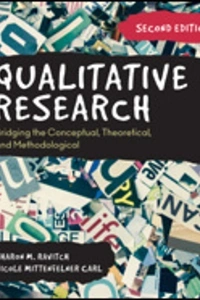
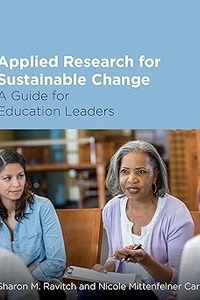
Carl is also the co-author of Qualitative Research: Bridging the Conceptual, Theoretical, and Methodological (2nd Edition; Sage, 2021) and Applied Research for Sustainable Change: A Guide for Education Leaders (Harvard Education Press, 2019).
An experienced teacher educator, Dr. Carl has worked across all of Penn GSE's teacher education programs. She previously served as associate director of the Urban Teaching Apprenticeship Program and as special projects lead for the Collaboratory for Teaching and Teacher Education. In these roles, she led initiatives to design curricula for mentoring novice teachers and to research issues of equity in teacher education. Dr. Carl also created and facilitated the mentoring curriculum for educators who support novice teachers in Penn GSE's Independent School Teaching Residency master’s program.
Dr. Carl earned her doctorate in Educational Leadership from the University of Pennsylvania. Before her graduate studies at Penn GSE, she taught middle school English in the School District of Philadelphia for five years, where she also served as the lead middle school teacher. In 2008, she was honored as one of three recipients of Drexel University's Make a Difference Award for Outstanding Mentoring and Teaching. During her doctoral studies at Penn GSE, Dr. Carl received the Korn Fellowship for impact assessment, which supported her work guiding research initiatives for the Center for the Study of Boys' and Girls' Lives.
Education
- Ed.D. (Educational Leadership) University of Pennsylvania, Oral and written dissertation awarded distinction, 2017
- B.A. (Sociology and Spanish, English minor) Austin College, Phi Beta Kappa; summa cum laude, 2006
Areas of Expertise
- Qualitative research methods
- Educational Leadership
- Urban, public education
- Social and cultural contexts of schools and schooling
- Teacher education (mentoring and coaching, teacher research, inquiry)
- Program evaluation
Academic Programs
Penn Chief Learning Officer, Ed.D. Urban Education, M.S.Ed. Urban Teaching Residency, M.S.Ed.Research Interests and Current Projects
Dr. Carl’s research focuses on four strands, including (1) the social and cultural contexts of schooling and its implications on students, teachers, parents, and school leaders; (2) ways that practitioners and students can conduct research to improve their schools; (3) practice and equity-based teacher education and mentorship; and (4) the study of qualitative and applied research methods.
Dr. Carl has been conducting qualitative research for two decades beginning in 2005 when she was awarded a Mellon Fellowship. Since then, Dr. Carl has led and participated in multiple qualitative and mixed methods research projects and written a seminal text with Sage about qualitative research methods, Qualitative Research: Bridging the Conceptual, Theoretical, and Methodological.
Dr. Carl believes strongly in the connections between theory and practice. Her co-authored book, Applied Research for Sustainable Change: A Guide for Education Leaders (Harvard Education Press, 2019), is an example of how practitioners can use research to improve practice. Dr. Carl has worked with school leaders, teachers, and students in a variety of contexts (public and independent) to consider ways to use research to drive school improvement as well as lead a multi-year, multi-site impact evaluation of the way that engaging in these projects influenced the schools and the individuals involved. She continues to research ways that practitioners can conduct and use research in their school contexts as well as support schools in the implementation of these projects.