Faculty Expert
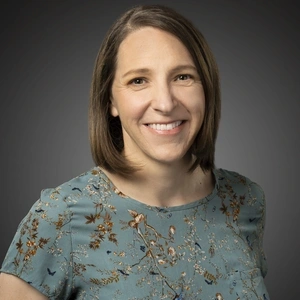
When doctoral candidate Estefanie Aguilar Padilla joined Penn GSE’s Higher Education Ph.D. program, she set out to understand the challenges that prevent students from persevering in college. And now, she’s been part of new research, guided by Associate Professor Rachel Baker, that offers insights into why so many students—roughly 40%— leave community college before finishing their course of study.
Aguilar Padilla, a fourth-year Ph.D. student and first-generation college graduate, has long been passionate about equity in education.
“Higher education has made a big difference in my own life,” she said. “That experience broadly motivated my interest in studying the barriers students face when trying to pursue and persist in college.”
Her latest project, part of a larger study led by Baker and the Community College Research Center (CCRC) focused on how students choose programs of study and careers, zeroes in on students who left community college after their first year. While financial challenges have long been cited as a major factor, this new work uncovers a more complex reality—one that could reshape how colleges support students.
Based on a survey of 480 former students who attended one of four community colleges in California, Maryland, Ohio, or Texas, the results, published as a report from the CCRC, challenge conventional wisdom. While financial strain was a factor for many who dropped out, it was seldom the only one.
“Students rarely leave college for a single reason,” Aguilar Padilla said. “For most, it was compounding varied reasons—many of which colleges can address.”
Among the most striking findings: a significant number of students cited low academic self-efficacy, such as feeling unsuccessful academically, stress, and changes in career goals as reasons for leaving. These patterns suggest that interventions focused solely on financial aid may miss other critical supports students need.
“If schools could address the fact that these students were also feeling unsuccessful academically, feeling stressed out, feeling out of the community, could that be a protective factor and lead many students to stay enrolled?” asked Baker.
According to her advisor, Aguilar Padilla played a pivotal role in the study. While she wasn’t part of the original study design, she co-led the drafting of survey questions aimed at former students, conducted a thorough review of the related literature, and was a key member of the team in recruiting students to fill out their survey.
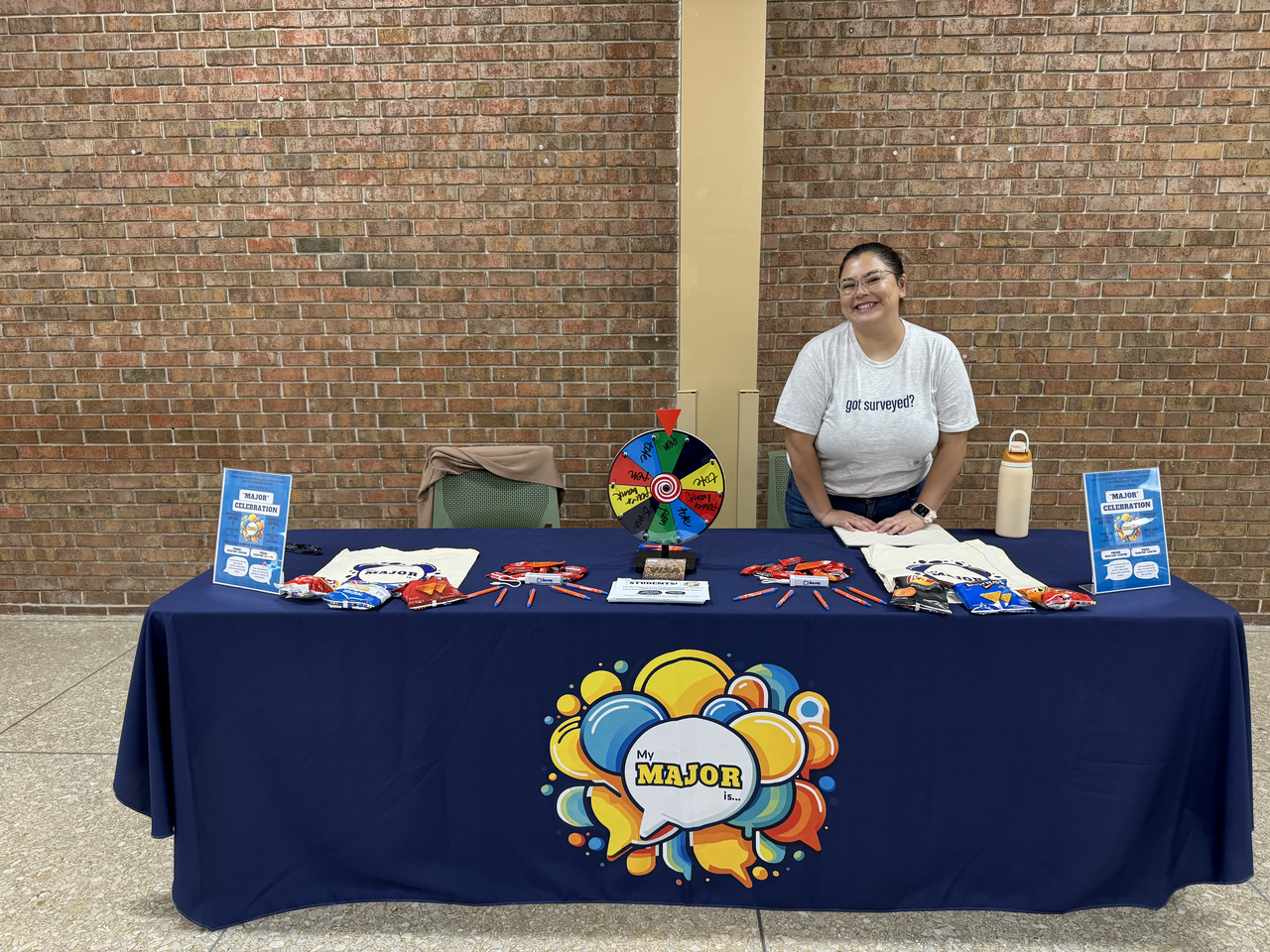
“We would go to classes where there were a lot of the first-time-in-college students, and we would table at the student center and the dining hall, and Estefanie had, by far, the most effective exchanges with students,” said Baker. “She’s so friendly, so approachable and unassuming and persuasive. She was truly incredible at connecting with students.”
Her leadership didn’t stop there. Aguilar Padilla conducted the data analysis and wrote the first full draft of the research brief—work that began as her qualifying paper for doctoral candidacy. She then collaborated with Baker and other researchers to refine the findings for publication. Working closely with Baker provided invaluable guidance.
“Rachel is a great advisor,” she said. “She makes time for her students and provides a lot of support. Having those conversations helped confirm that I was interpreting results appropriately and pushed me to think more deeply about patterns we were observing.”
Baker praised Aguilar Padilla’s contributions, describing her as “an excellent collaborator” with a deep commitment to the work. “She’s thorough, produces high-quality work, and really cares about these topics,” Baker said. “Everyone loves working with her.”
Aguilar Padilla, a Penn IES Predoctoral Fellow, Presidential Fellow, and Fontaine Fellow, is now preparing her dissertation proposal, which will build on this research by examining how first-year experiences predict persistence among community college students. She is also working on additional papers and helping the team collect more data to understand what former students are doing now—and what might help them return to college.
The implications of this research are already resonating with college administrators, said Baker. A recent webinar on the larger study drew record attendance, signaling strong interest in strategies to better serve students who leave college.
Media Inquiries
Penn GSE Communications is here to help reporters connect with the education experts they need.