Faculty Expert
-
-

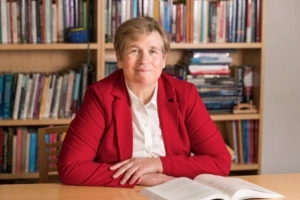
Sigal Ben-Porath
MRMJJ Presidential Professor
Policy, Organizations, Leadership, and Systems Division
Course Title: “Classroom Discourse”
Taught By: Associate Professor Abby Reisman and MRMJJ Presidential Professor Sigal Ben-Porath
Description:
The course serves as a laboratory of sorts in which we reflect upon our own participation in and facilitation of discussion. These reflections will allow us to consider our roles and identities as participants and facilitators of discussion as we grapple with the role of classroom discourse in K–12 and higher education settings.
A recent report issued by the National Academy of Education calls for teachers to engage students in civic reasoning and discourse across subjects and ages in K-12 classrooms. In higher education too, we see a renewed focus on dialogue. These initiatives respond to escalating concern that our civic institutions will not be able to withstand growing polarization, misinformation, and radicalization. Against this backdrop, civic discourse promises a return to democratic values, grounded in good-faith engagement and a shared vision of the common good. And yet, this goal remains as elusive as ever in classrooms.
What is classroom discourse, why is it valuable, and why is it so rare in both K–12 and higher education? The seminar draws from readings in philosophy, learning theory, and research on classrooms and teacher education to consider these questions.
Says Ben-Porath:
"I would say that our goal for the course is to invite the students to consider why and how teachers should facilitate discussions in class. Why not just lecture? What is the relevance of students' views and voices, their interactions and their grappling with ideas in class, if the teacher could just tell them the correct answer? We hope that our students learn to see the myriad benefits of discussion in class, for students, for learning goals, and for society, and that they learn how discussion can go well, and what to do when it does not. We aim to advance these goals through the readings and through our students' experience in our class."
Says Reisman:
"Co-teaching with Sigal has been especially fulfilling. Our different perspectives on the salient questions surrounding classroom discourse allow for a rich, interdisciplinary exploration."
Students’ reaction:
“This course feels incredibly timely!” said Tia Gaines, Penn’s associate director of the Office of Social Equity and Community, who is currently enrolled in the class. “It’s pushed me to think more deeply about what actually makes classroom discourse democratic, and what kinds of systems and support have to be in place for that to happen in meaningful ways.”

“I no longer see [discussion] as a way to reach an answer, but as a practice of taking one another seriously and sharing a space where disagreement can exist without fear,” shares Ziyad Alsaab, a current student in the TESOL program. “What matters is not only what we conclude, but whether we treat each other as rational partners in that process.”
“Coming to Penn GSE with experience as a classroom teacher, I prioritized opportunities to gain practical skills,” said Madeline Morningstar, a master’s student in the Education, Culture and Society program. “This course offers a unique path to that: we engage philosophical questions not as abstractions, but for the sake of better understanding real students.”
“We are not talking about theory to leave it on the page or in the air of our discussions; we are producing a reflective awareness of teaching praxis that carries more weight than notes from a reading,” said Bean Fischer, a currently enrolled student from the Teaching, Learning, and Leadership program.
Media Inquiries
Penn GSE Communications is here to help reporters connect with the education experts they need.