Faculty Expert
Course Title: “Methods and Analysis of Quantitative Educational Research”
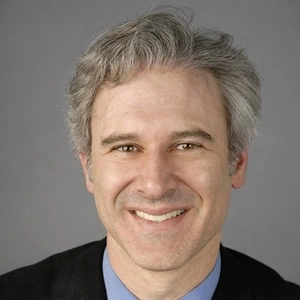
Taught By: Professor of Leadership and Policy and Director of the Consortium for Policy Research in Education (CPRE) Jonathan A. Supovitz
Description:
This course introduces students to empirical applications of quantitative research methods by closely examining a range of studies about contemporary educational issues. Each week they take both a broad look—through student presentations—and a deep dive into studies on important education topics including early age language development, social emotional learning, parent involvement, teacher preparation, and cultural responsiveness. The studies are carefully chosen to scaffold the array of design, measurement, and analytical techniques so that students build a solid grounding in quantitative research methods. From these experiences, students develop a strong foundation in the different quantitative approaches commonly used in the field to investigate empirical questions and become more capable and critical consumers of educational knowledge and research. We welcome master's and doctoral students from any program and specialty, the more diverse, the better.

Supovitz says:
“We have fun in this class by drawing upon the range of our social experiences to demystify technical research ideas. The trick of this class, which I have developed over many years, is to use a progression of carefully selected education studies on contemporary issues to progressively build a strong understanding of both quantitative research design considerations and analysis techniques. As students in the class know, it’s all about relationships.”
Students’ Reactions:
"This is a fabulous class that is useful for graduate students at both the master’s and doctoral levels,” said Zhanlan Wei, a doctoral student in the Learning Sciences and Technology program. “The class is very welcoming—even if you have limited prior experience with quantitative methods the professor provides patient, step-by-step guidance. The brain warm-up exercise and theme at the beginning of each class are also engaging and help highlight the key ideas. For me, the course really helped me appreciate the beauty and the rigor of quantitative methods, and made me feel more comfortable working with them!"
"As a nontraditional doctoral student who hadn't touched statistics in years, this course was exactly what I needed,” said Dennis Langlois, who is pursuing an Ed.D. in the Higher Education program. “Dr. Supovitz builds your understanding incrementally — using compelling higher education policy and other case studies to anchor each method—so you're learning to think like a researcher, not just memorizing formulas, which deepens understanding in a way that a lecture alone never could."
Tom Yuan, a master’s student in the Education Policy program, said: “I appreciate the small class size, which helps build the dynamic student-teacher connection I seek. Collaborating with peers on problem sets and student-led presentations not only helped me reinforce my conceptual learning, but also improved my communication skills while pushing me out of my comfort zone.”
Media Inquiries
Penn GSE Communications is here to help reporters connect with the education experts they need.